Tommy Rental
Testing fashion rental through customer evidence and partner-led validation.
Context
Tommy Hilfiger had been exploring clothing rental for several years as part of its circular-fashion ambitions. A mono-brand pilot had reached launch preparation before Covid put it on hold. When the work restarted, the obvious move was to pick up where it left off. We didn’t. Too many important questions were still unanswered: who actually wanted rental, which markets were ready, whether people wanted Tommy-only or multi-brand, subscription or pay-as-you-go, what they wanted to rent — and whether the model could work commercially and sustainably. So before committing more money to launch, we took the proposition back to Problem Fit.
My Role
As Lead Venture Builder at oneUp, I worked with the venture team, PVH stakeholders and rental-market partners to revalidate the opportunity and shape the next investment decision. I worked across customer discovery, experiment design, market analysis, surveys, partner research, proposition development, business-model design, smoke testing, commercial modelling and pilot design. My job wasn’t to prove rental was a good idea. It was to work out what version of rental, for whom, in which market, was worth testing next.
Problem
Circular fashion made strategic sense for Tommy Hilfiger. That didn’t mean a Tommy rental service would. The existing proposition was close to launch, but several fundamental assumptions had not been sufficiently tested: - Did customers want a Tommy-only rental service? - Would they subscribe, or rent occasionally? - Which products and occasions created genuine demand? - Which markets were ready? - Could rental work without Tommy building an expensive new operating model? - And could it genuinely deliver both commercial and sustainability value? The biggest risk was mistaking momentum for validation.
Approach
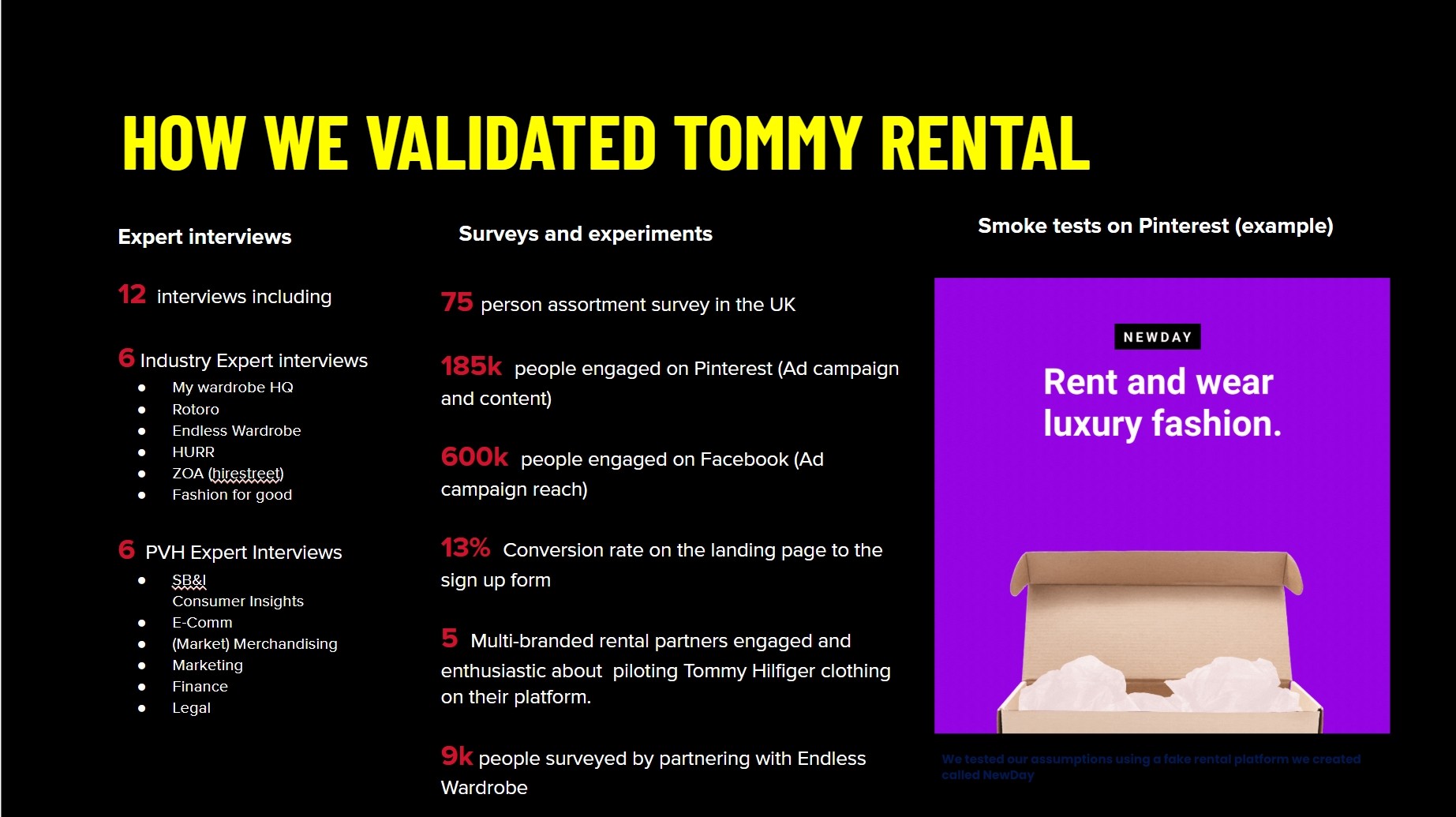
We reopened discovery instead of protecting the sunk cost of the near-launch proposition. Research combined: 20 customer interviews 6 external expert interviews 5 internal PVH interviews 50+ market and research sources ~1,310 survey respondents across the UK, Netherlands, France and Germany We mapped the riskiest assumptions, tested customer behaviour and market readiness, and used a two-day ideation process to turn the evidence into three possible routes: 1. Partner with an existing multi-brand rental platform Learn from real rental customers without building the infrastructure first. 2. Explore a Tommy-led multi-brand proposition Take greater ownership of the customer experience and business model. 3. Explore physical rental / renewal experiences Extend the proposition beyond online rental. As the evidence developed, one principle became increasingly compelling: Build less. Learn faster. Test through existing platforms first.
Experiments / Evidence
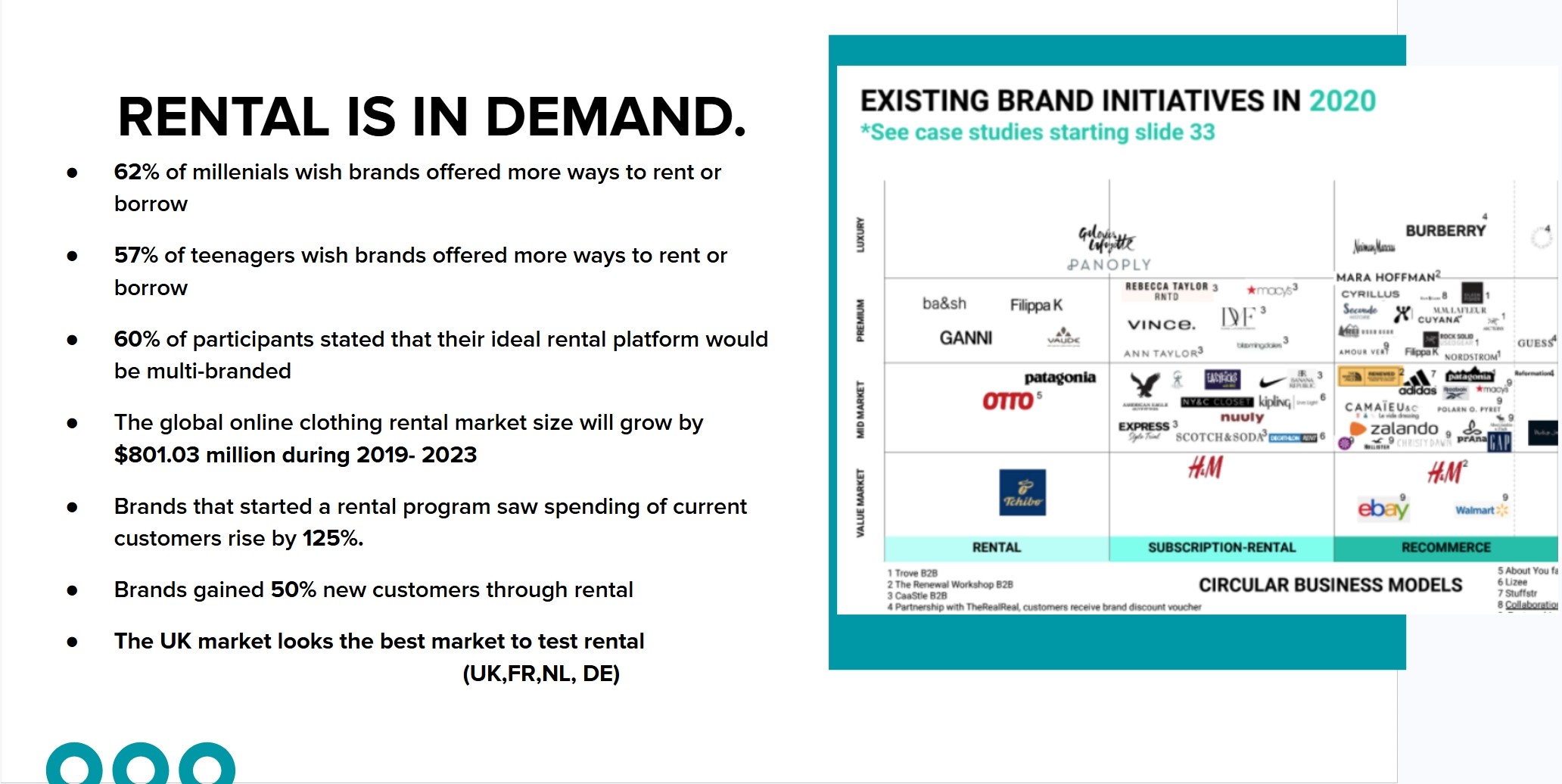
The evidence didn’t simply validate or reject rental. It changed the business model. Multi-brand beat mono-brand Customers generally preferred the choice of a multi-brand platform over a Tommy-only rental destination.
Pay-as-you-go beat subscription Occasional rental was more attractive than another monthly commitment. In the UK, 76% preferred occasional rental to subscription. Rental needed a reason Special occasions, premium pieces and experimenting with style were stronger use cases than simply “renting clothes”.
Customers also valued saving money, accessing things they couldn’t justify buying, adding variety without owning more, and saving wardrobe space. Sustainability mattered — but it wasn’t the only job customers wanted rental to do. Hygiene was part of the proposition Around 25% of surveyed participants raised hygiene as a barrier.
Cleaning, transparency and trust couldn’t be treated as back-office details. They directly affected desirability. Market readiness varied sharply The Netherlands looked significantly less ready: 94% had never rented clothing.
The UK showed stronger behaviour: 54% had rented clothing before, and around 75% of those said they would rent again. Then we tested behaviour Later validation included assortment research, campaign testing and a fake rental proposition called NewDay.
Across separate experiments: 13% landing-page visitor → sign-up conversion 53.8% expressed interest in renting Tommy Hilfiger in landing-page testing 64% selected Tommy rental in a Facebook choice test 5 rental-platform partners expressed interest in testing Tommy Hilfiger The wider validation also included a 75-person UK assortment study, around 600k Facebook campaign reach, 185k Pinterest campaign engagement / audience, and research through an Endless Wardrobe partnership reaching 9,000 people. These were separate experiments answering different questions — not one conversion funnel.
Outcome
The project moved Tommy Rental from a paused mono-brand launch towards an evidence-led, partner-based model. Instead of building warehousing, cleaning, logistics, rental technology and customer-service infrastructure before proving demand, existing platforms offered a lower-risk route to learn from real customers. The recommendation became a proposed nine-month, two-platform pilot, deliberately using different audiences and learning goals to test: product choice, repeat behaviour, pricing, utilisation, operations, customer economics and circularity. The validation work supported approximately €200k of further investment. The next step was not “launch Tommy Rental”. It was to run a real-world pilot and use the evidence to decide whether a larger Tommy-owned rental ecosystem deserved to exist.
What I Learned
Sunk cost isn’t validation. Something being close to launch doesn’t mean it should launch. Going backwards can sometimes be the fastest route forward. Customer evidence can change the business model. The original direction leaned mono-brand and subscription. The evidence favoured multi-brand, pay-as-you-go and partner-led testing. Partners can be part of the experiment. Existing platforms offered a way to test the proposition in the real market without prematurely building expensive infrastructure. Sustainability needs its own evidence. Rental is not automatically circular. Logistics, cleaning, utilisation, repair and end-of-life all matter. A good pilot targets the unknowns. The purpose of the proposed pilot wasn’t simply to launch. It was to answer the commercial, behavioural and operational questions that still mattered.
Key Metrics